
Habitat for Humanity may work around the corner from you, but we also work across Canada and around the world. To date, Habitat for Humanity International has built, rehabilitated or improved more than 1 million houses in 70 countries and provided shelter for more than 6.8 MILLION people worldwide!
Through Habitat’s Global Village volunteer trips, you can volunteer with us in more than 40 nations. Our trips offer more than just the opportunity to swing a hammer. You’ll experience the country like a local and meet people from around the world. While your trip may last for a week or more, your financial, emotional and physical contributions can be life-changing for both those in the communities where you work and in your own life for years to come.
Habitat for Humanity Canada’s support for the Global Village program impacted 1,404 families in Ethiopia, Cambodia, El Salvador, Honduras and Haiti in 2016.
The Canadian Global Village teams bring invaluable support to the communities they visit. Their concentrated people power and enthusiasm give homeowners a real boost. More homes are built each year because of the donation Global Village teams make to the hosting Habitat affiliates. Global Village teams are composed of eight to twenty volunteers, and are led by one or two experienced volunteers who are trained and supported by the Global Village staff.
The Habitat for Humanity Canada – Global Village Program
so far in 2017…

Fifty-six new Habitat homes have been completed this year in Cambodia, Ethiopia, El Salvador, Nicaragua, and Dominican Republic. An additional 10 Habitat homes are currently under construction in Malawi.

One latrine has been completed so far this year in Ethiopia. It is currently serving 20 families in the community of Fitche, improving sanitation and restoring dignity.

In El Salvador, 101 vulnerable youth from at-risk areas have engaged in productive activities while volunteering on two Habitat home construction sites in their communities.

This year more than 130 people have been empowered through training programs on various topics, including financial literacy, entrepreneurship, family violence, and how to secure land tenure.
A group of seven staff, volunteers and board members from Habitat MVI headed to Nicaragua in April where they helped build a home for a local family in need. The build was organised as part of habitat Canada’s global build program, which Habitat MVI donated $10,000 to last year.
This was the first international build Habitat MVI representatives had participated in. The team were involved in building a new home for a family of nine who had been living as squatters, using garbage to fill holes in the home they had put together using found materials.
It took only nine days for the team, who were joined by members of other Habitat Societies and the local Nicaraguan Habitat for Humanity, to build the home, a single room with solid walls, a roof and doors, minus the roof which was due to be added soon after.
For the entire team of volunteers, the trip was an emotional one. Happy tears were shed for and by the recipient family who were delighted to have a home which won’t be flooded in rainy season.
In April of 2019, Sarah Bramley of Habitat for Humanity Mid Vancouver Island led a dedicated team of Canadian volunteers to El Salvador for an international build experience that embodied the heart of Habitat’s mission. The team was made up of volunteers from coast to coast, with several proudly representing Vancouver Island. Among them were Sarah’s father, Melvin Bramley, Jenna Mayzes from United Floors, and Kyle Knox of Knox Contracting—each bringing their own skills, determination, and willingness to get their hands dirty in service of a future Habitat family.
The group stayed just outside of San Salvador, where their primary task was to prepare the land for the next Habitat build. While they would not see the home completed during their time there, their work was critical. The team focused on levelling the property so the next Habitat crew could begin construction on a safe and stable foundation for the family’s future home.
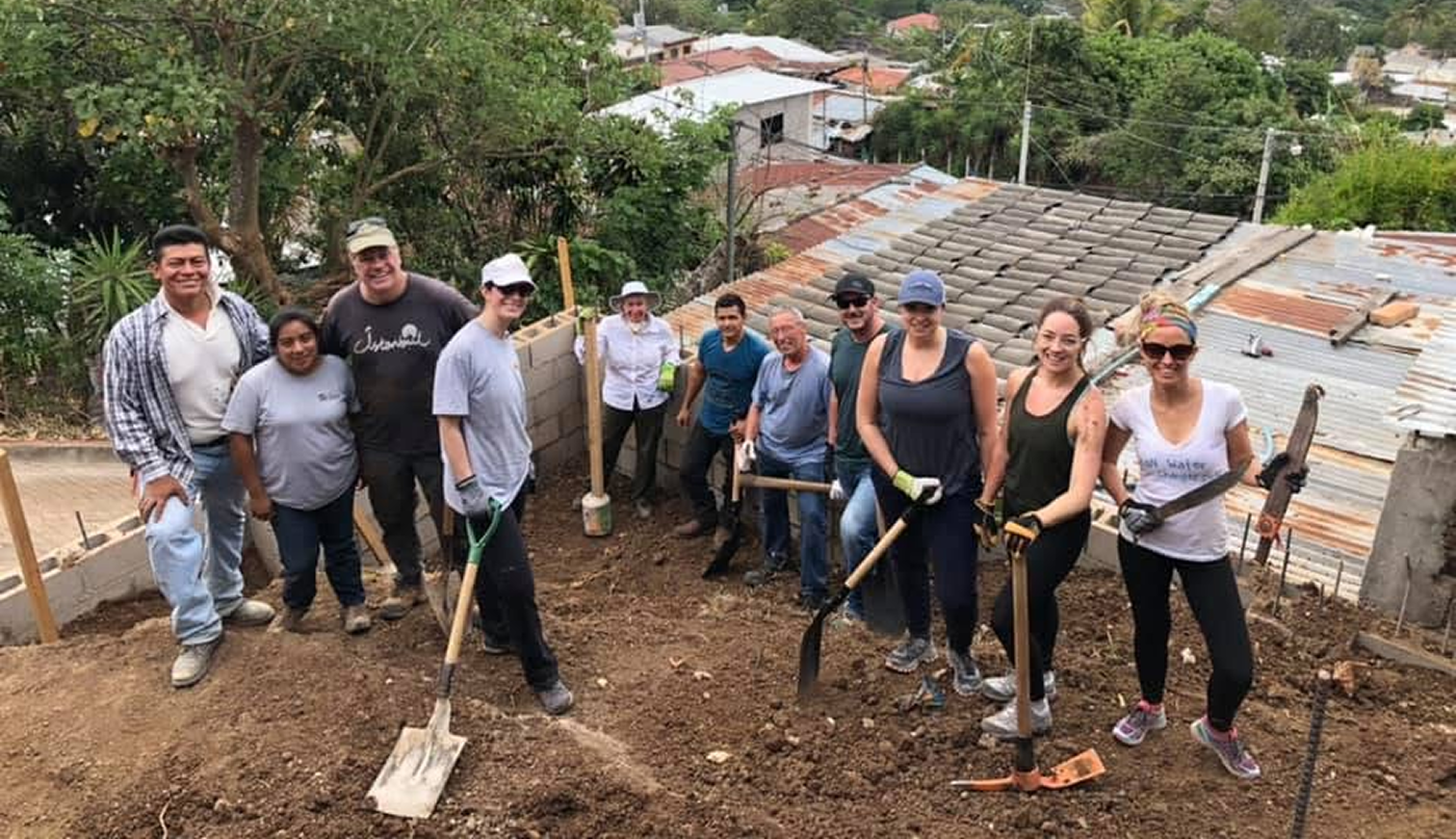
Over the course of the week, the volunteers worked side by side with local neighbours and Habitat El Salvador staff, using pickaxes and shovels to move an astonishing sixteen dump truck loads of dirt. It was physically demanding, gritty work—but it was also deeply rewarding. The collaboration across cultures, languages, and backgrounds highlighted the power of community and shared purpose.
In November 2019, Sarah Bramley from Habitat for Humanity Mid Vancouver Island led a Habitat build to Fiji—marking the first time she led a full team of volunteers made up entirely of people she had never met before. The team came together from across Canada, with many traveling from Ontario, united by a shared commitment to Habitat’s mission and a willingness to step far outside their comfort zones to build something lasting.
The group reflected the beautiful diversity of the Habitat community. Among the volunteers was a father and daughter taking part in a meaningful family tradition: for each child’s 20th birthday, they choose a Habitat build somewhere in the world to complete together. The team also included Lisa, a staff member from Habitat Southern Alberta, Todd, a construction worker from Victoria, and many others who brought a wide range of skills, perspectives, and passions to the build.
The home was constructed on donated land from a local sugar cane farmer on Fiji’s main island, just outside of Nadi in the community of Lautoka. Working side by side with local partners, the team built the entire home from the ground up. Designed to withstand the region’s climate, the house was raised off the ground to protect against flooding caused by cyclones and reinforced with extensive strapping to ensure it could endure severe weather.
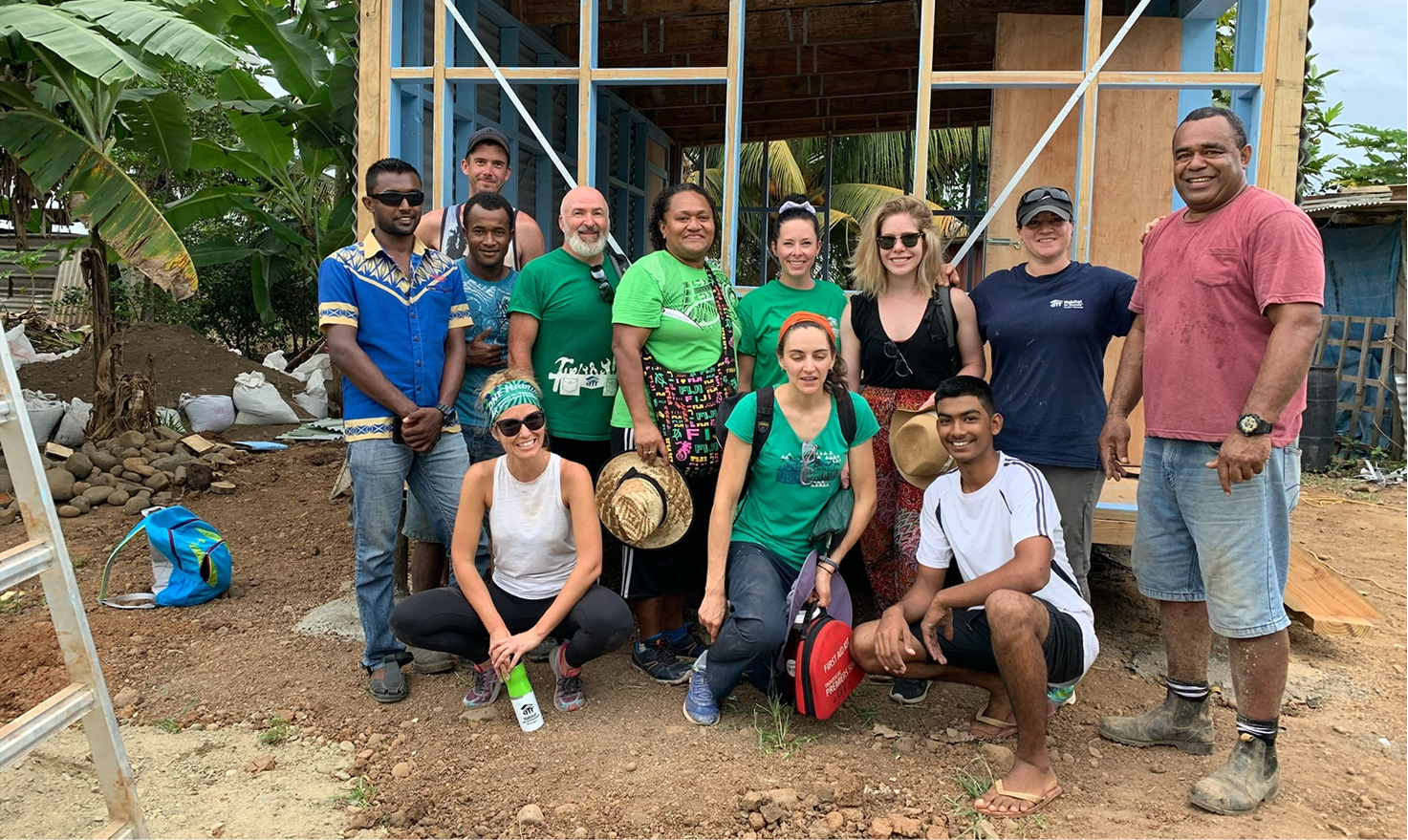
Beyond the build itself, the experience was rich with cultural connection. The team was invited by a local community member to take part in a traditional Diwali celebration, deepening their understanding of the place and people they were working alongside. To mark the completion of the home, the volunteers created a sign naming the house, with leaf prints made from the fingerprints of everyone who helped construct it—a lasting symbol of collaboration, care, and the many hands that made the home possible.
Get inspiring stories, project updates, and opportunities to support affordable housing—right in your inbox. No spam, just impact. Unsubscribe anytime.
.avif)
.avif)
.avif)
.avif)


.avif)

